2025 became the year when the transformation of heavy road transport truly accelerated. Technologies that only a few years ago were considered pilot projects are now part of everyday operations. Electrification, HCT and digitalisation continue to drive the development and 2026 will be the year when the pieces start falling into place for real.
Electrification – from early tests to broad implementation
A total of around 350 heavy electric trucks were registered in Sweden during 2025, corresponding to 7% of new sales – significantly higher than Europe’s 1.9%. Electrification is clearly entering a more mature phase, but bottlenecks remain: range, charging infrastructure and access to power capacity.
2026 will be the year when:
• Business models for electric trucks begin to stabilise
• More segments beyond urban traffic and regional distribution become electrified
• Europe’s pace of investment accelerates – with the potential to reach a 15% electric share of new registrations already in 2027
HCT – The Nordics Lead the Way
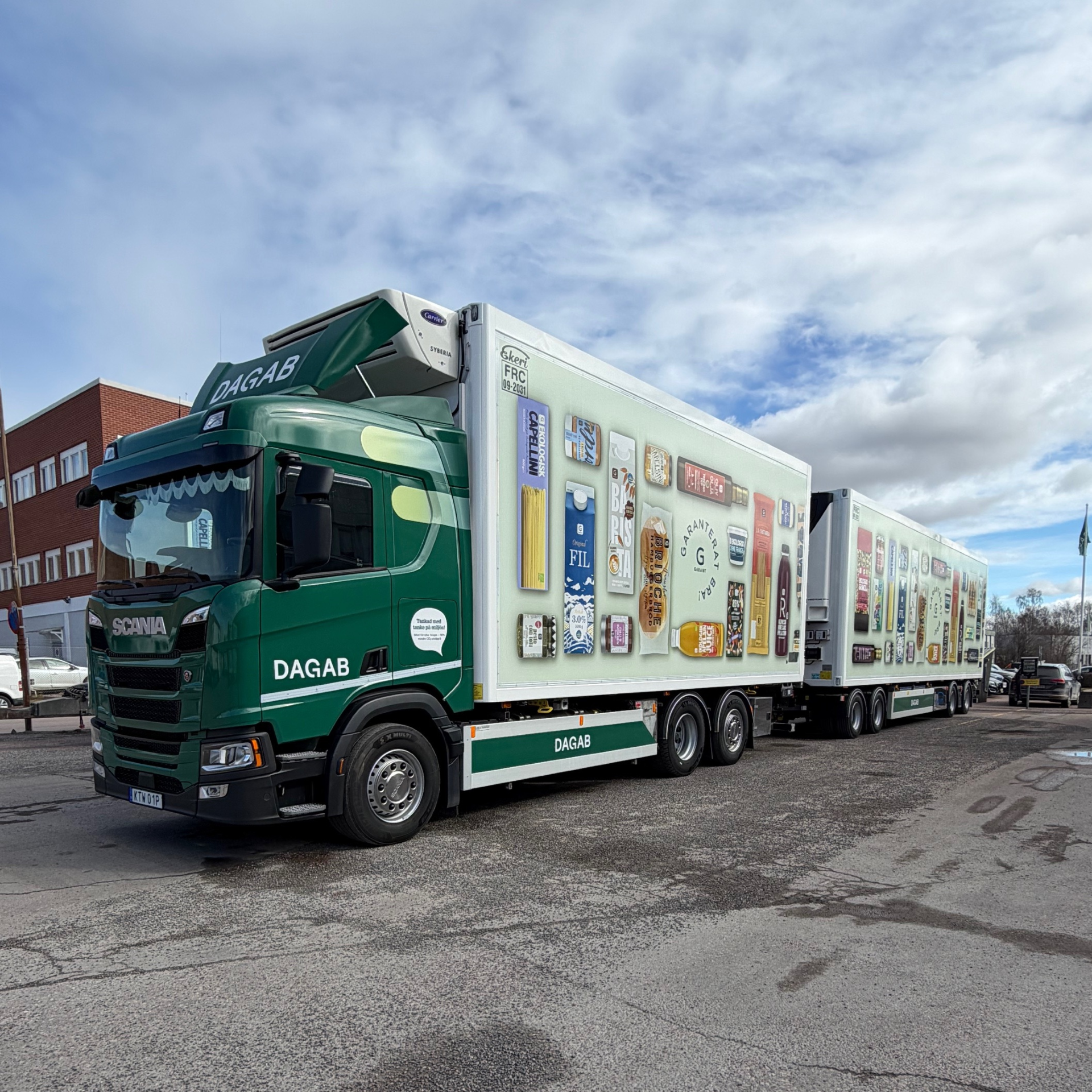
Sweden made major progress in 2025 by introducing three additional vehicle combinations and now allowing five combinations up to 34.5 metres. Finland continues to stay ahead, and the demand for trailers longer than 12 metres – already common in Finnish 34.5-metre combinations – is rising in Sweden as well. However, regulatory changes will be required in Sweden before the same flexibility can be achieved.
Denmark is scaling up its trials and plans to integrate A-double combinations, higher gross weights and technical requirements aligned with Sweden into ordinary regulation by 2030. Norway took its first step toward 34.5 metres at the end of 2025 by launching a pilot with a “Swedish” A-double in southern Norway, creating a direct connection to Sweden across Svinesund.
2026 may become the year when Nordic collaboration takes a clearly coordinated direction, with more harmonised regulations strengthening the region’s logistical competitiveness.
Infrastructure and Regulation – the Hidden Engine
Expansion of charging infrastructure, road capacity and rest areas will be crucial for scaling both electrification and HCT. Sweden’s new national plan ensures that all BK1 roads will be upgraded to BK4 by 2037 – a necessary condition for broader use of 74-tonne combinations.
For 34.5-metre vehicles, the challenge is less about weight and more about opening up the extensive BK1 road network and including municipal roads in the system. A long-awaited report from VTI on vulnerable road users, cyclists and the impact of other vehicles at 34.5 metres has now been published, providing a basis for larger-scale approval of road networks already in 2026.
At EU level, negotiations on vehicle length and weight continue. The previous ambition for broad harmonisation at 25.25 metres and 60 tonnes has been toned down, but several key proposals remain: +4 tonnes for ZEV, increased drive axle load, 44 tonnes cross-border for diesel until 2035, and the possibility for voluntary cross-border EMS/HCT operations between member states.
2026 may become the year when the framework for the future of European transport is set – and where the Nordics succeed in maintaining their ability to operate long and heavy combinations.
Geopolitics and resilience – a new strategic dimension
Battery supply, energy prices and shifting global logistics structures continue to influence investment decisions in the industry. Companies place increasing emphasis on resilience, redundancy and local availability – a trend expected to strengthen in 2026.
What Lies Around the Corner?
2026 will likely be characterised by:
• Accelerated electrification across Europe and the Nordics,
• Tightened sustainability requirements despite a temporary breather through the Omnibus
• Stronger Nordic collaboration on HCT, and growing awareness that the real bottlenecks in the transition are not the technologies but regulations and infrastructure.
Conclusion
The transition is global, but the opportunities are local. Sweden and the Nordics have all the prerequisites to lead the next phase of development – provided that political decisions, infrastructure and business models continue to evolve at the same pace as the technology.
Talk to us if you are interested in what VBG can offer to support in HCT applications.